Semkovo: Building Community Governance for Digital Nomads
- Run legally binding votes for a global cooperative
- Give distributed members full agency in decisions
- Keep all governance discussions in one searchable place
- Track engagement and participation across members
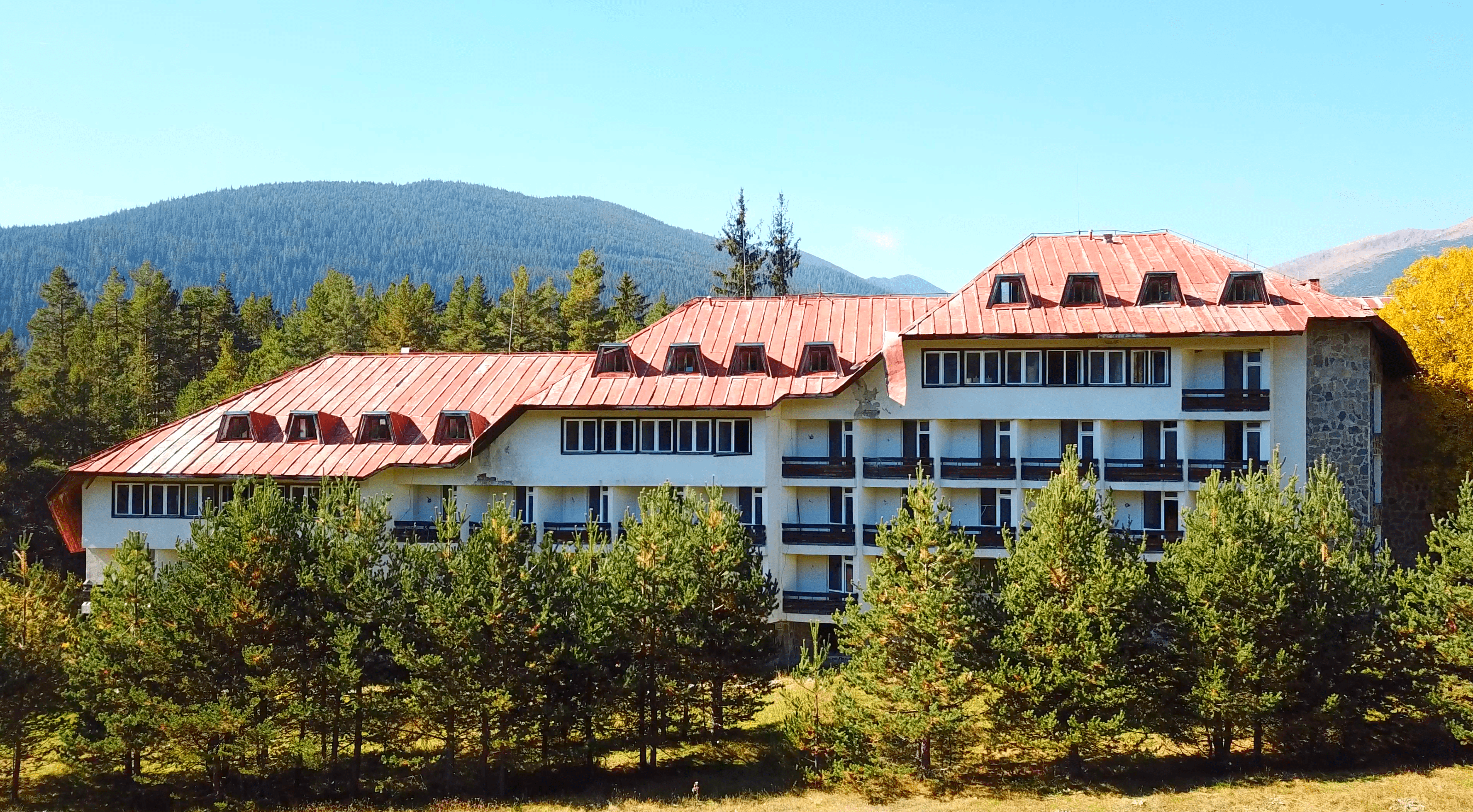
High in the Bulgarian mountains sits a massive communist-era building. Surrounded by pine forest, this 17,000 square meter, 200-unit locale has undergone a huge transformation. In its new life, this site is the home of Semkovo Co-op, a coliving destination for digital nomads and remote workers, governed entirely by the people who own the cooperative.
Matthias Zeitler, founder and elected chairman of the Semkovo cooperative, had a strong intuition that traditional governance wouldn't work. "Most of our owners are distributed all across the world. We are from 32 different countries, and very few people are in Bulgaria consistently," he explains. "From the beginning, we wanted to find a model for all remote members to have full agency in all of our decisions."
The challenge was clear: how do you make consequential decisions about tangible things like renovations, budgets, and business operations when your 130 neighbors are scattered across the globe?
Getting Started
Before Semkovo was established as a cooperative, Matthias learned of and tested Loomio. "We used the trial version just to see how it worked," he recalls. Once the co-op formed with their first 50 members, they upgraded to the pro version. There was never a question of whether they needed digital decision making. The question was finding the exact tool that would work for their needs.
"It was pretty clear to everyone from the beginning that we needed a digital decision making platform. That it should also be easy to figure out what has been discussed before," Matthias reflects. "This is not like an ad hoc thing where you just start a Facebook poll for every discussion. You need to have ... a structure for how you can organize information."
They looked at more general platforms like Slack. But Matthias knew they needed something specialized for the voting component. The cooperative included many programmers and digital professionals who had concerns about vote security and whether folks could manipulate results. The specialized nature of Loomio provided reassurance. "We have a lot of digital professionals who are concerned, like, is this really safe? What happens if the leadership over-influences this?"
For Semkovo, a Loomio vote doesn't simply showcase members' preferences. "This really is a legally binding vote. It goes into the trade registry. So we needed some assurances that, yes, this is a proper way of voting and tracking votes and tracking engagement."
Structuring Decision Rights

Normally, a Bulgarian cooperative would require in-person meetings and an annual General Assembly. Semkovo structured their statutes differently. "All our decision making is online because most of our owners are distributed all across the world. We discuss and vote for everything on Loomio, and then our official general assemblies just confirm previously done online votes."
The General Assembly has become a lean formality. A lawyer takes notes. But the real work happened online, already decided. "By our statutes, the meeting in person cannot vote on topics that have not been pre-voted online before."
Not everything goes to a vote. As chairman, Matthias holds a management contract for day-to-day operational decisions. "We have 130 people, most of them are very successful in their lives, and they used to make all the decisions, but if 130 people make all the decisions, you never get anywhere," he notes. "So we are trying to focus on the important stuff."
At the start of each year, Matthias presents a budget. Members approve how money is spent and sets annual priorities. Then during the year, smaller decisions are delegated: which colors to paint walls, finishing options, other details. The cooperative as a whole focuses on consequential choices: which areas to renovate first, what level of finishing to pursue, strategic direction overall.
Initially, only a smaller group, the management board could bring topics to vote. "Many people said, 'Hey, it would be super cool if members could also bring up topics.' So we changed this." The irony? Very few members take advantage of that power. "Very few members actually use this. This is related to the fact that we are running more like a business, and a lot of members don't have exact insights into what decisions are priority."
Members wanted the option. Having the option to raise a voice mattered. "Members were very vocal that we should allow it, but then it turned out that it's not really used." Perhaps as move-in dates near, the IRL community component will make this option more popular.
Managing Engagement at Scale
Even with 130 people on Loomio, Matthias has realistic expectations about participation. "There are some people that just have more time and that are more engaged. And there's other people that basically believe, okay, if there's a sufficient amount of people discussing, then they are okay with going with the majority decision for most of the things."
He's used Loomio's participation report to share reality with the group. "Unfortunately, we have only about half of our members actually using Loomio at all. So even for important votes, they stay out. And of the other half of people that use Loomio, there's maybe like 10 that are super active, and then 40 to 50 that mostly read and maybe log in once a month or so just to see what's going on."
But Matthias sees this as acceptable, even healthy. "I wouldn't expect that everyone needs to be super engaged. It's more important to show this transparency and give people the option to engage. So that they can see how decisions are being made. And at any time, they have the opportunity to also be part of the decision making. And if they choose not to be part of it and go with the majority, then I think this is also fine."
A Culture of Commitment
Semkovo is a bit different from typical coliving spaces given the financial commitment. People bought entire apartments. "Normally, if you're part of a coliving space, especially if you're a digital nomad, if you don't like it there, you leave," Matthias observes. "In our community, people have bought property. So leaving is not so easy."
That creates natural incentives for cooperation. "If you're too aggressive towards the other people, then it will make it very difficult for you to enjoy your apartment here later."
Decisions happen by majority vote. "This is difficult for some people because some people always believe their way is the only way," Matthias admits. "For me as a chairman, it's difficult because if people come to me, they're sometimes vocal about their position."
But bringing decisions to the whole group for a vote makes his role easier. "Then I'm not the one who has to decide this. And, of course, people have to learn that they have to live with the majority decisions."
The pattern is consistent. "Before we vote, people are normally vocal, but then after we have voted, everyone is like, okay, now we have made a decision, and that's decided."
Keeping Information Centralized
Semkovo uses WhatsApp, but only for jokes or casual chat. "For owners, we really try to get everything through Loomio." They even use the tool for newsletters. Instead of sending separate email updates, they create threads on Loomio that generate email notifications.
"It makes sense to keep things together because the biggest challenge is information living in too many different channels, then people can't find it anymore," Matthias explains. "People don't engage every day. Maybe they log in once a week or once a month, they want to know what's going on. If there are too many channels, it's a problem."
The cooperative also uses Loomio for subgroups. Early on, members had questions about interior design. Some members with relevant skills self-organised: "They created a little bit of a working group, then presented to the whole co-op their findings and recommendations. This is also pretty easy to do on Loomio. You create these subgroups for a specific topic, then you come back and wrap it all up."
Even the management board uses the tool for closed discussions. "We want to be accountable to what we discuss. Instead of going on a WhatsApp group, we have a structured conversation. In principle, this could also be audited later if needed."
Advice for Other Communities
For communities considering similar structures, Matthias advises to "Just try it. This is how we tested before we incorporated. We used it for like 3-4 weeks for some preliminary discussions just to see how it works, how easy it was."
The trial worked. People liked it. They compared it to other platforms like Slack and decided Loomio fit their needs. "It's really easy to try. I always believe you need to try stuff and then see what works and what doesn't work."
Two and a half years into their renovation, with construction crews of 70 people working on site, Semkovo is now 6-9 months from owners moving into apartments. A year after that, they hope to be ready for guest operations. Throughout the process, the 130 owners from 32 countries have been making decisions together about how to build their future community.
When asked what would be most difficult if Loomio disappeared tomorrow, Matthias laughs. "Obviously, it would be finding another tool, figuring out how to migrate the data that we have that is still accessible for past decisions... I already have too many things to deal with, so don't make me migrate to a different tool, please."
For now, migration isn't necessary. Semkovo has what they need: a way for 130 people to govern themselves across time zones, cultures and construction projects. They've created a system where decisions are made, documented, and respected. It's a crucial digital foundation for the physical community they're building in the mountains.
Tags: Cooperatives
